Runner-Up? I’ll Take It!

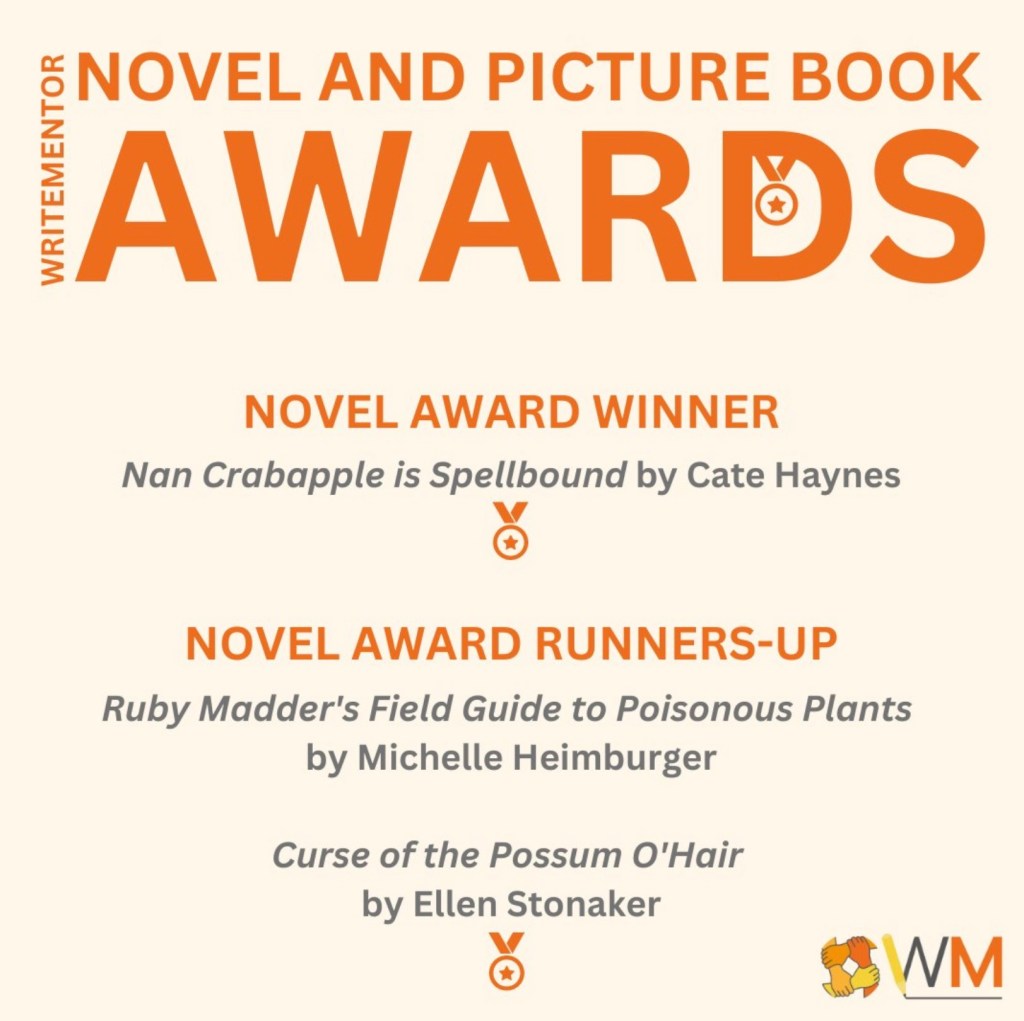
WriteMentor just announced their 2023 Novel and Picture Book Awards winners and I’m a runner-up! I am so excited — perhaps more than you might expect for not winning.

It can be so dispiriting trying to get your book out there. You’ve done your industry homework, developed your skills, learned from critique partners and classes and workshops. You’ve written (and edited and re-edited) a book you know is good. When you’ve finally got it all polished and pretty (complete with the dreaded synopsis and elevator pitch and comp titles and all that) you enter contests and send query letters to agents and then wait.

And wait.

And sometimes get polite rejections but never know why. There could be countless reasons — it’s not a good fit with that particular agent, they’ve got enough of your genre and age range already, the contest competition was just too good — but in the vacuum of what’s often a very solitary job, it’s impossible to keep the doubts at bay. No matter how confident you may be (at the best of times), you inevitably come back to wondering if all that silence and polite rejection is simply because the novel you’ve spent so many hours creating is just … not that good.

Or, slightly-better-than-worst-case scenario, the novel might be good but you’re so terrible at pitches and queries that no one will give it a shot. If only you could get someone to read the whole thing! Or tell you what’s not working. Or anything other than silence. It’s frustrating, and the more it gets you down, the harder it is to send the next round of queries or the next contest submission. You know deep down that that’s what it takes — just keep going, persistence pays off, everyone has setbacks — but whew. Some days that’s a lot easier said than done.

So this — this might be second place, it might not come with a cash prize or a contract, but it’s something. It means industry professionals — people who know a lot about the market and what readers like — not only actually read my book but saw something in it that they found worthwhile. If nothing else, that’s the reassurance my anxious mind needs to help me keep going for the next round of query letters … and the next book*.

*As soon as I decide which of the three books I’m working on will get my full attention…

2018 Goal: 50 Rejections

Writing is hard on the ego, so aiming to collect rejections probably sounds masochistic. Every single writer gets them, of course, but even knowing that J.K. Rowling and Stephen King were roundly rejected before finally breaking through doesn’t really dull the sting of being spurned. It’s easy to give one negative response disproportionate weight and just abandon the effort and slink off into hiding — but instead I’m trying to change my focus so the inevitable rejections don’t kill my momentum.

Fifty rejections isn’t a New Year’s resolution so much as the evolution of my “stop being so damned negative” mindset from last year. But I’m finally ready to start sending queries (for Ghost Town, the middle grade mystery) and it happens to be early January, so it feels right to make it a goal. I considered making it 100 (like Kim Liao’s inspirational Why You Should Aim for 100 Rejections a Year) because it’s such a satisfying round number, but I know my own tendency to obsess to hit arbitrary goals — like writing 11,000 words in the last two days to finish NaNoWriMo in November. My time is limited, though, and I don’t want to give up writing to only send submissions this year. I also want to make sure I’m sending good queries to the right people because rejections to half-assed and mismatched submissions would be cheating.

At least it’ll be easy to beat last year’s total of one rejection. Of course, I only made one submission — and not winning a contest probably doesn’t even count as rejection, no matter how much it felt that way. It certainly stung, but maybe the tenth rejection will sting less. And maybe the 50th will be almost satisfying for achieving a goal.


Other creative goals for 2018 (fine, call them New Year’s resolutions if you must):
– Finishing the last couple illustrations for Stealing the Show and getting it printed for my kids — because even if I never try to revise it and get it published I’ve put a lot of hours into this book and want my kids to have a physical copy of it.
– Completing last year’s NaNoWriMo novel before I forget where it was going when I stopped cold on December 1.
– Figuring out what to do with my Franklin Castle novel. Maybe I’ll revise heavily and make it pure fiction. Maybe I’ll write the missing scenes and keep it as it is, a fictionalized semi-memoir. Either way, it needs some attention. Even if I never let another soul read it.
– Hyping my creative friends. I know so many brilliant people who make beautiful, strange and interesting things. I am going to make a concerted effort to not only buy their books/comics/art but to do my part to help them reach a wider audience. Watch this space…

A Flying Leap

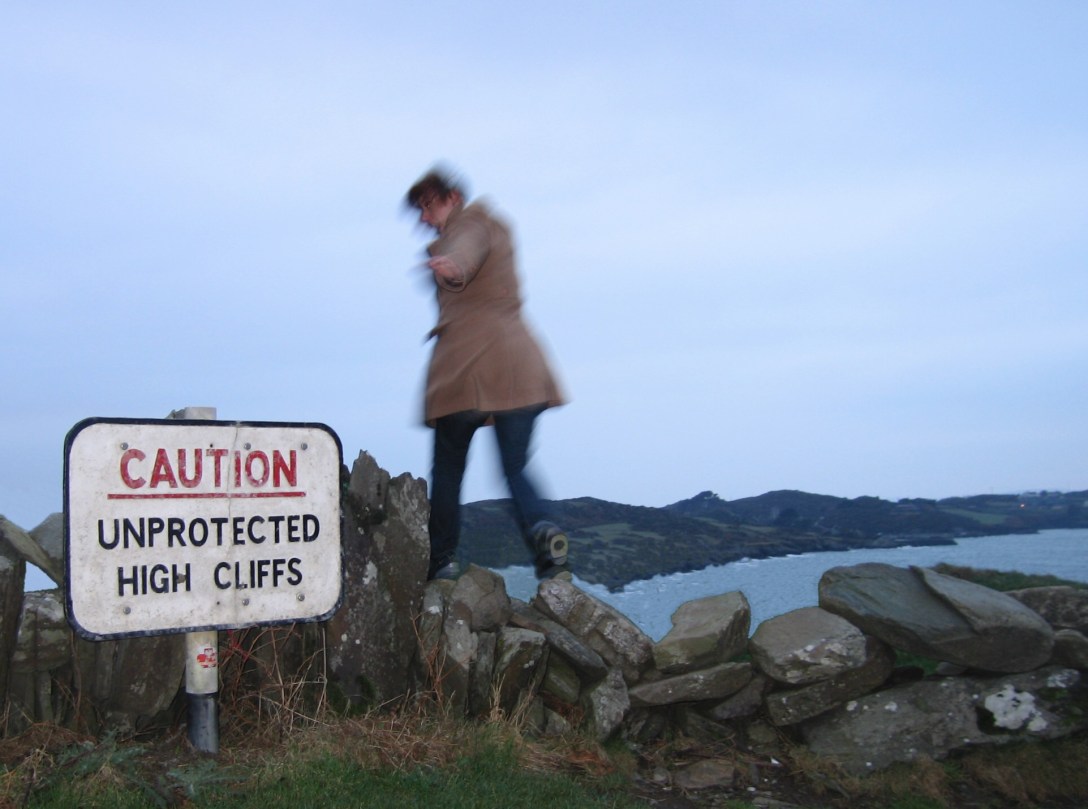
I feel like every time I dip my toes into the waters of the publishing industry I get unceremoniously washed back to shore with my swimsuit full of sand and salt water up my nose before I even start swimming. Over and over again, I finish writing a book and actually think it’s pretty good: I’m confident! Excited! Ready to take the next step! So I start looking into the process of getting published — crafting the perfect query letter and synopsis, finding an agent vs. approaching publishers directly, identifying which ones might be a good fit — and then I sink like a stone.


Here’s what most industry sites seem to want writers to know:

  • Your novel is probably bad. Everyone has written one, and nearly everything that you first-time authors produce is amateurish and terrible. (Best case scenario: recycling bin. Worst case: subject of underpaid assistant editors’ gleeful mockery.)
  • Agents and publishers are swimming in manuscripts. No matter how good they are, virtually none of them will even be seen, let alone published.
  • To stand any chance at all, you must take as many classes as possible (an MFA in creative writing at the very least), join multiple critique groups, and hire an editor (or a few — you unpublished types probably need the extra help).
  • You have to win some awards. If you haven’t won anything no one will even look at your manuscript. (Unless you’re a celebrity. Are you a celebrity? No? Bad luck.)
  • You must read everything in your genre/market and be familiar with all recent and upcoming trends and titles. Your story must completely different and better than all of them.
  • You need an established online brand and a massive, devoted social media following. (If you’re not spending two hours a day on Twitter, you’re just not trying.)
  • It’s vital to attend conferences regularly and make as many industry contacts as possible, including but not limited to agents, publishers, editors, editorial assistants, and published authors with strong sales records.
  • You must have glowing personal references from top-tier agents or bestselling authors. (That should be easy since you’re now BFFs.)
  • Without these things you will not be published unless you’re the one-in-a-million fluke who’s miraculously written something amazing through some sort of cosmic serendipity or divine intervention and also the stars happen to align perfectly. (But you’re not, you haven’t and they won’t.)


Whew. So I brush the sand out of my eyes and start thinking how I’d better get to work on all of that stuff first, before I even consider inflicting my work on anyone else. Sure thing. Easy peasy. Only … I’d rather be, you know, writing. All of that research, online schmoozing and author-stalking takes way more time (and possibly superhuman abilities) than I have. It sounds exhausting. And I’m sure that’s the point: Weed out the easily scared before they even have a chance to add to the industry’s workload.

At this point I often have a terrible thought — a glimmer of not-quite-dead-yet confidence — that maybe those things don’t all apply to me. Of course agents get inundated with terrible submissions from people who haven’t even bothered to proofread and haven’t read enough books to know the basics of storytelling (or the basics of grammar). Except those people are probably having the exact same thought, which means … oh no, I’m one of them! I’ve written a terrible book and can’t even see how bad it is. That’s proof that it’s terrible!

After that I’m ready to just bury my manuscript and move on. The problem is that I keep getting hung up at that stage. Finish book, get excited, do research, despair. I don’t even get to the stage where I actually send things out to get rejected for real — I’m self-rejecting before the professionals have a chance to do it. It’s not that I’m afraid of rejection so much as I’m so sure of it that I just cut out the middleman.

After several times through this cycle, though, I might finally break it. My endlessly patient husband stopped me at the beginning of the Despair phase this time, very reasonably pointing out that this isn’t my first novel, I have taken classes and done critiques, I have done market research, and I’ve already made revisions based on feedback from readers. He also calmly reassured me that test readers have busy lives and there are plenty of reasons why someone might ask to read my manuscript and then never mention it again (reasons beyond my theory that they did read it, but they hated it so much that they can’t even bring themselves to tell me they hated it). And he reminded me that the test readers I have heard from said nice things and gave helpful feedback. Maybe, he suggested, I should trust the positive responses for once and stop assuming that silence is negative.

So I know I’m never going to have two hours a day to spend on Twitter and I have no interest in schmoozing strangers simply for the sake of making industry contacts. But I’ve put a lot of work into this book (and all the ones that came before) and each one benefits from the lessons I learned on the last. It probably will get rejected, because most submissions do, but that’s no reason not to give it a shot. Maybe it’s time to stop worrying about getting every possible thing perfect according to someone else’s standards and, to return to my lame ocean metaphor, just dive in…
Shifting Gears

The problem with working quickly is that sometimes you get 85,000 words into a project before the second thoughts kick in. I knew from the beginning that the novel I started back in September was either the most marketable thing I’d ever written or a potential disaster. But I was having fun and clearly got a little carried away, writing nearly every day that the kids were at school — sometimes several thousand words per day. From late September through early February I wrote the bulk of the book, with just a handful of chapters remaining to tie some middle sections together. It was rough, dumped straight out of my brain to be harshly edited later, but it was going well.

Then the kids had a week off school and when I got back to writing I realized my momentum was gone. I’d already written the end of the book, which was probably a mistake — it’s hard to go back once the story feels like it’s been told. I stepped back and finally considered what I’d made, and the more I thought about it, the more I leaned toward “potential disaster.”

Luckily, around the same time I started talking with a friend about a children’s book he was working on and I felt inspired to return to a middle grade mystery I’d set aside a couple years ago. I jumped back in and six weeks later my first draft was done. Now it’s in the hands of test readers and I’m diving back into another abandoned project (an alternate history YA novel) for Camp NaNoWriMo — and hoping to use that autopilot speed-writing for something less disastrous!

It’s Like NaNoWriMo in September

Eight days of work, 20,000 words. I make no claims about this being a work of literary genius, but I’m pleased with my productivity. So far it’s mostly fragmented scenes without much structure, but I’m guessing the first draft will clock in around 100,000 words (and it’ll definitely shrink during editing). I’m not setting a daily word count goal, but if I can keep up this pace (not too likely) then a (very) rough draft could exist by Halloween! How fitting.

Okay, back to work…

My Own Worst Editor

I’ve always had a wordiness problem. When other high-schoolers were lamenting 500-word essays, I was thinking “500 words? That’s just my prologue!” My college thesis was roughly 40 pages longer than necessary (and surely even my advisors didn’t make it to the end because it was a massive heap of pretentious gibberish). I may also enjoy a liberal sprinkling of superfluous adjectives.

Yet somehow, hilariously, I’ve spent the last 22 months working as a copyeditor for a daily news briefing, a task which requires tightening up text from (already alarmingly short) paragraphs. And it’s fine — it’s not like I’m not able to be succinct. In fact, I was slightly surprised to discover I’m pretty good at that element of the job: Take a paragraph, somewhere in the ballpark of 106 words, telling the key facts of a story. Check for grammatical errors and style guide compliance. Fact check. Improve the flow. Prune unnecessary words. Revise to eliminate even more words to get it down to 95. Check it all again. Move on to the next. It’s fun … if you’re a big nerd like me.

The really surprising thing, though, is that this newfound succinctness is leaking into my other writing. (And if you’re thinking “Really?” based on this rambling, I can assure you that yes, two years ago this would have been even ramblier.) One example: The epic rhyming picture book that started at an utterly unpublishable 1,719 words — the one I congratulated myself on trimming down under 1,200 a few years ago? It’s now 757.

The only problem is that now when I return to a project I spend more time pruning than writing. So I’ve decided to use this newfound talent for dismantling my previous work to take another pass at my first novel, the “practice novel.” It’s got some plot problems I’ll also need to deal with along the way, but I’m curious how much I can tighten it up. I’ve just started, but I’ve already chopped the first chapter from 2,013 words to 1,864.

It’s strange to think of writing as a subtractive process.

Reader Unlikely to Care About Little Miss Smug*

*Actual note from my writing teacher on my first chapter. (I’m just hoping he was talking about my narrator.)

Well, I had my first critique in my writing class today, and I survived, though I’m not sure my novel will — at least not in its current form. My classmates were mostly encouraging, but the teacher had a big problem with the voice of my narrator. I had worried that she might be unlikeable because she’s snarky and judgmental and more than a little bitter, but he was more concerned that writing it in her voice would alienate readers, that she was like being pinned down by an obnoxious person at a party who invades your personal space to rant at you. He’s got a point, though I admit I quite like listening to snarky people rant (when I can close the book/browser to shut them up). Being so inside her head makes it hard to see the rest of the characters or the world they’re in.

At least I’m only about 40 pages in, so rewriting now is better than having to rewrite a whole novel…